
by Matthew Caldwell • Director of Marketing, Denada
Everyone Is Talking About Agents
There was one topic at Braze Forge this year: agentic. Every session, every booth and every hallway conversation came back to it.
Braze’s own agents looked promising. They’re also very new. We didn’t see them proven or in use yet. Time will tell how they roll out.
What Braze Announced
Braze announced a lot. Here’s the list, grouped by what it does for your team. Several items are still in beta. (See Braze’s full launch post.)
Agents that do the work
- Operator Canvas Creation: describe a customer journey in plain language and Operator builds or edits the Canvas.
- Conversational Agents (beta): two-way, context-aware conversations with customers over WhatsApp, SMS, RCS and web.
- Decisioning Studio Go (beta): self-serve AI agents that choose the best variant, send time, day and frequency for each customer.
Smarter testing and prioritization
- Content Optimizer: instead of one A/B test at a time, it tests hundreds of message combinations at once and shifts volume to the winners.
- Message Prioritization: one shared ranking across campaigns and Canvases, so the most valuable message reaches each customer first.
Guardrails before you send
- Agentic Standards (beta): write your review rules once in plain language, and AI checks every campaign and Canvas against them before launch.
- Usage Alerts, Message Observability Dashboard and Canvas Alerts: earlier warnings on spend and campaign health.
Data in, data out
- Databricks OpenSharing: real-time Braze engagement data in your Databricks Lakehouse, with no ETL pipelines.
- Cloud Data Ingestion updates: new warehouse sources and a no-code data mapper.
- Shopify Markets & Segments: localized language, currency, pricing and segments synced from Shopify.
- Surveys: drag-and-drop surveys in in-app messages and landing pages that feed segments and trigger Canvases.
Braze inside your AI tools
- Remote MCP Server: connect AI agents and dev tools to Braze through a secure URL in about a minute.
- Operator Connect (beta): use Operator from tools like Claude and Cursor through the Braze MCP.
Our read
The list lines up with what we heard on the floor. Braze is putting agents to work on journeys, decisioning, testing, QA and data. Those are the same jobs marketers told us they want to automate in 2027.
What’s not on the list is the creative itself: designing, coding, writing and translating the emails. That’s still the gap, and it’s the work Denada does, with finished, on-brand emails exported straight to Braze.
Most People Are Still Learning
A lot of attendees are in learning mode. They’re trying to work out what agents can actually do today and where they fit on their team.
Where the Agents Are Today
Most of the agentic flows we heard about cover three things:
- Campaign setup
- Audience targeting and selection
- Lifecycle setup
We did hear about agents that make creative and handle production. We didn’t see any of them in action.
Creative and Production Is Still the Gap
This is the work Denada does. Denada is an agent that handles creative, copy, coding, content, approvals, versions and translations.
We have yet to see another agent that can do all of this consistently and reliably.
Drag-and-Drop Tools Are Struggling to Make the Shift
We heard from several people that traditional drag-and-drop email tools are having a hard time moving to agent and prompt-based flows.
We even heard a whopper of a tale: a very large pharmaceutical company is completely stalled because the agentic flows it expected aren’t delivering.
One Agent for Everything, or One Agent per Workflow?
The next two to five years will unleash a massive amount of automation. There’s no doubt agents will handle the tedious work.
But, like always with software, we heard a general wariness about having too many tools. Marketers want one central place they can prompt to do it all. We can see where that’s going: to the big agents themselves, like ChatGPT and Claude.
Tools built for a specific workflow, like email creative, are niche for a reason. They’re purpose-built to handle the specific challenges of creative and production.
That’s where the balance is. One agentic tool that does everything but isn’t focused on anything, or a few tools that each do one workflow very well.
Agent Fatigue Is Real
Overall, we saw a lot of exhaustion on the topic. People looked like they needed a walk in the forest. Hearing “agents” over and over seems to be wearing people down.
Sonos on Stage: Two Years of Agentic Email
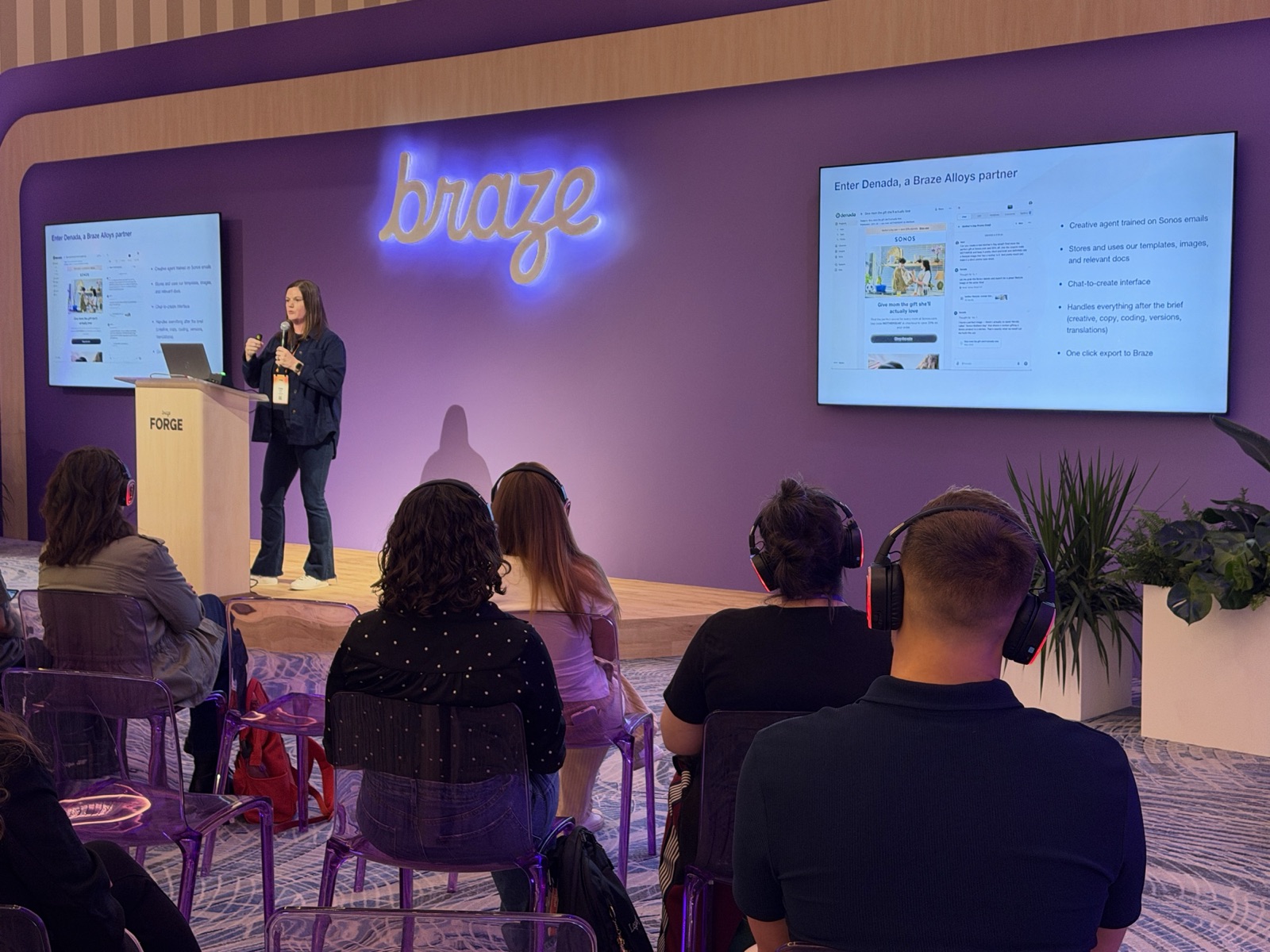
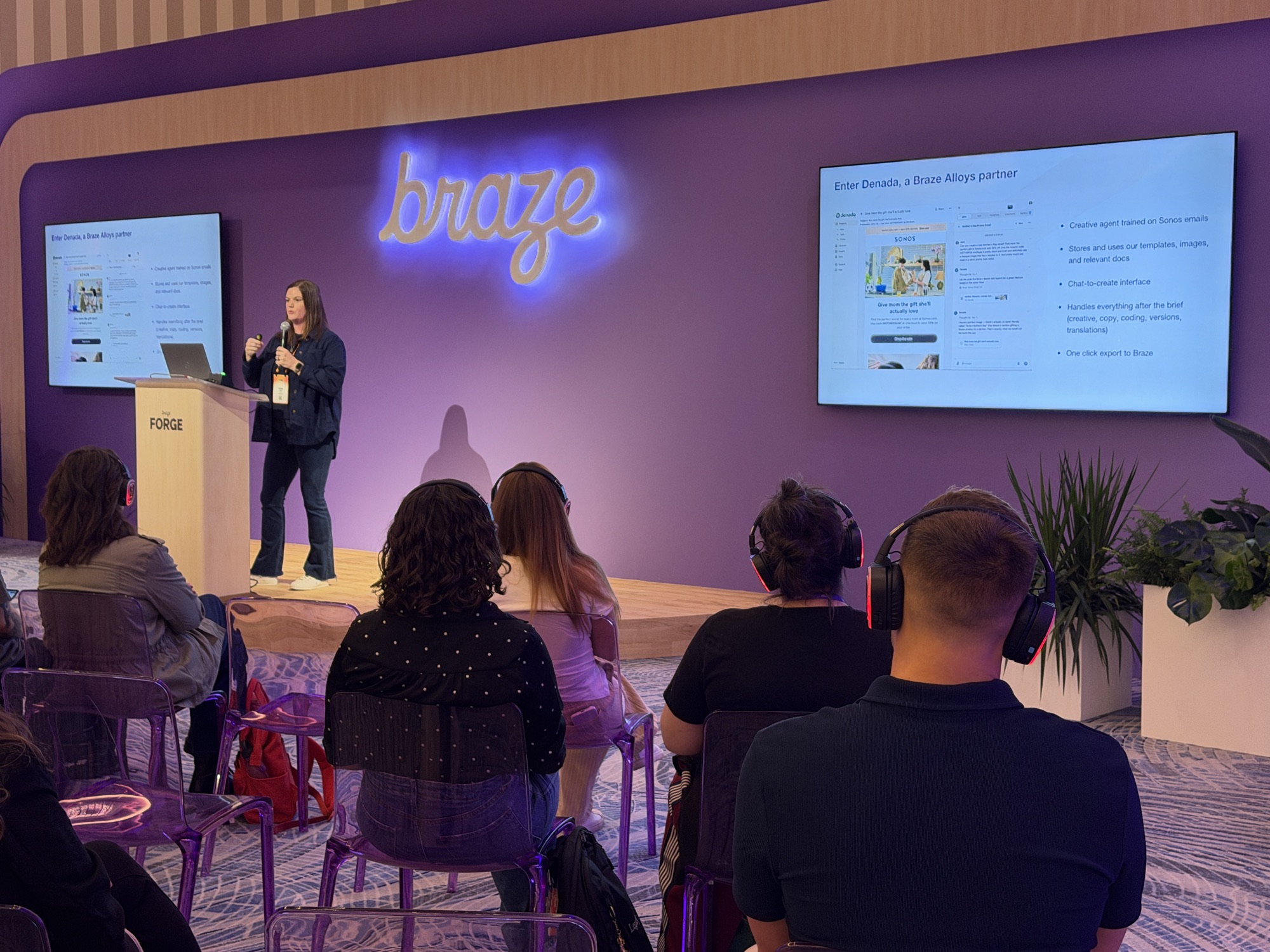
One session showed agents already working in production. On Tuesday, September 29, Libby Croak, Director of Lifecycle Marketing at Sonos, walked about 40 attendees through how Sonos built an AI-powered email engine with Denada.
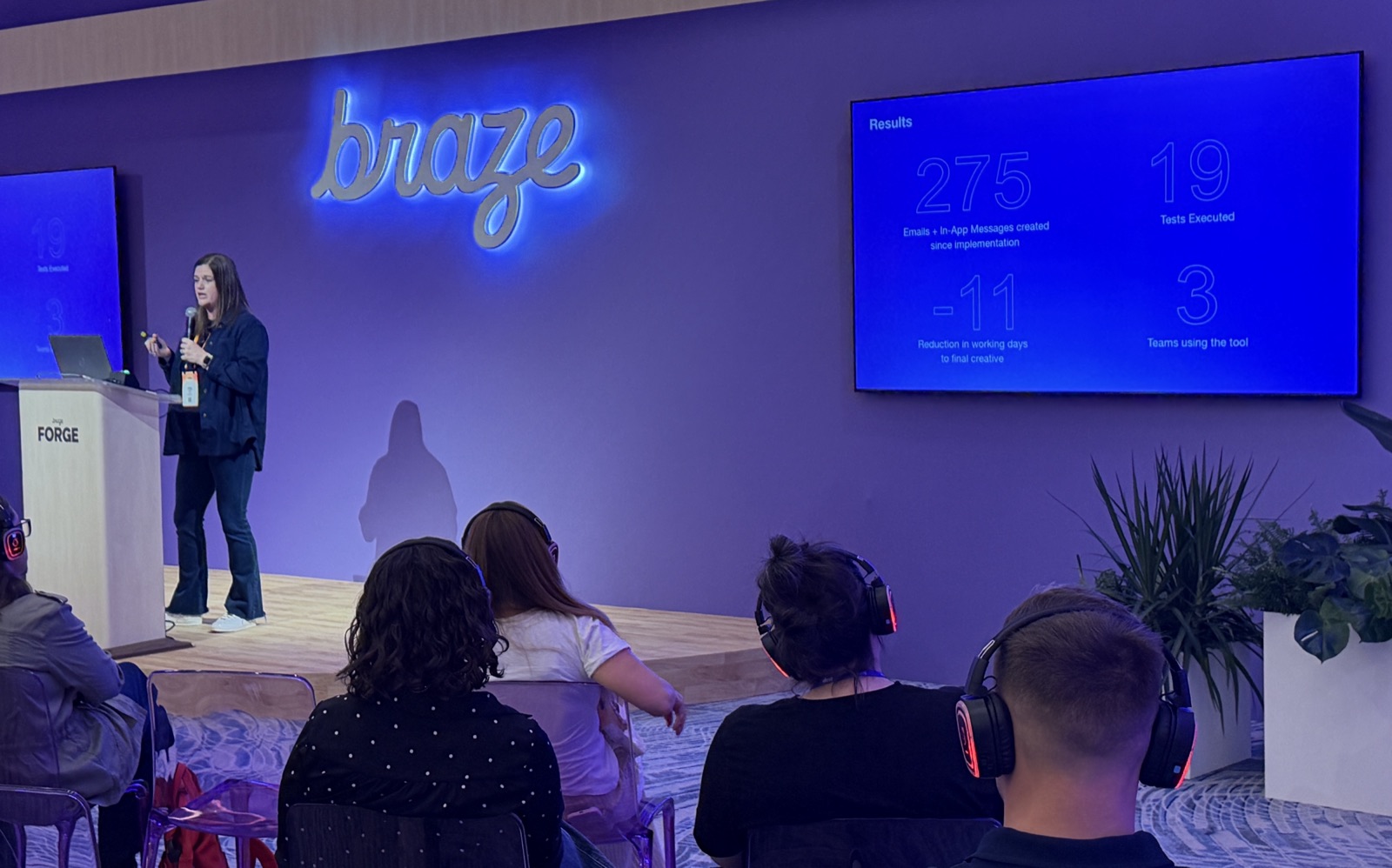
Sonos installed Denada in 2024. Getting to final creative went from 20 to 41 working days down to 8 to 12. Since then, the team has created 275 emails and in-app messages, run 19 tests and rolled Denada out to 3 teams.
Read the full recap of Libby’s session →
The Denada Agentic Supper Club
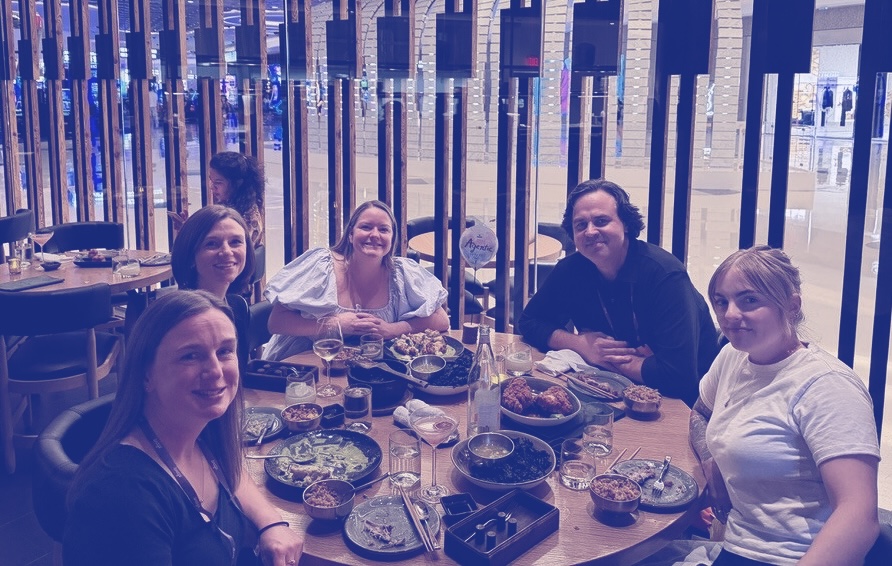
We also gathered a table of Braze experts for dinner, hosted by Denada Chief Product Officer Alex Williams.
 Ariana SchleismanDirector, Messaging SolutionsMerkle
 Jessie SmithSr. Digital Marketing SpecialistBrightstar Lottery
 Katie WolffLifecycle Marketing ManagerCactus
 Krista RobertsonSr. Email Marketing ManagerBitPay
Everyone is in discovery mode. Most expect 2027 to be the year they automate campaign setup, audience selection, email and SMS creation, and QA. They’re interested in Braze’s own agents, but those are still in beta, and the open questions are when and at what cost.
Read what we heard at the Agentic Supper Club →
Our Take
Those are our honest observations from Braze Forge. Agents are coming. Time will tell which ones actually deliver.